
👋 Hey, Nick here. A big welcome to the new subscribers from NBG, Apollo, and Golub. You’re now one of the 3,704 subscribers, and you’re reading the 192nd edition of my private credit newsletter.
Reading on Outlook? The charts won’t render. Read it online
📕 Reads of the Week
Sixth Street | “Every time we see those three things… it results in dislocation”
Alan Waxman, Co-Founder and CEO of Sixth Street, spoke to Bloomberg about the AI capex:
There are three things on our mind that concern us. The first is that there’s been a massive expansion of credit quickly. The second is speculative fervor, animal spirits, or FOMO. And the third is that we’re starting to observe distortions in the market.
Why do those three things matter? Because in our investing career, every time we see those three things being true, it results in a dislocation.
Market Updates
Pemberton | The investment case for NAV financing
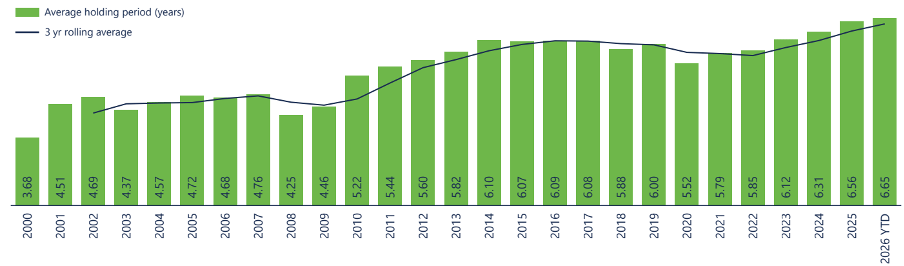
Buyout holding periods have risen to record highs across North America and Western Europe.
The current average of 6.65 years is almost double the level seen in 2000.
More than half of PE-backed assets have been held for four years or longer, another record, and PE fundraising this year is 40% below the 2021 peak.
Cardo AI | State of Private Credit – Fund Performance: Q3 2026
Cardo AI’s Private Credit Quarterly analysed the performance of 80 closed-end private credit funds.
👉 Cardo AI
Barings | 2027 Credit Outlook
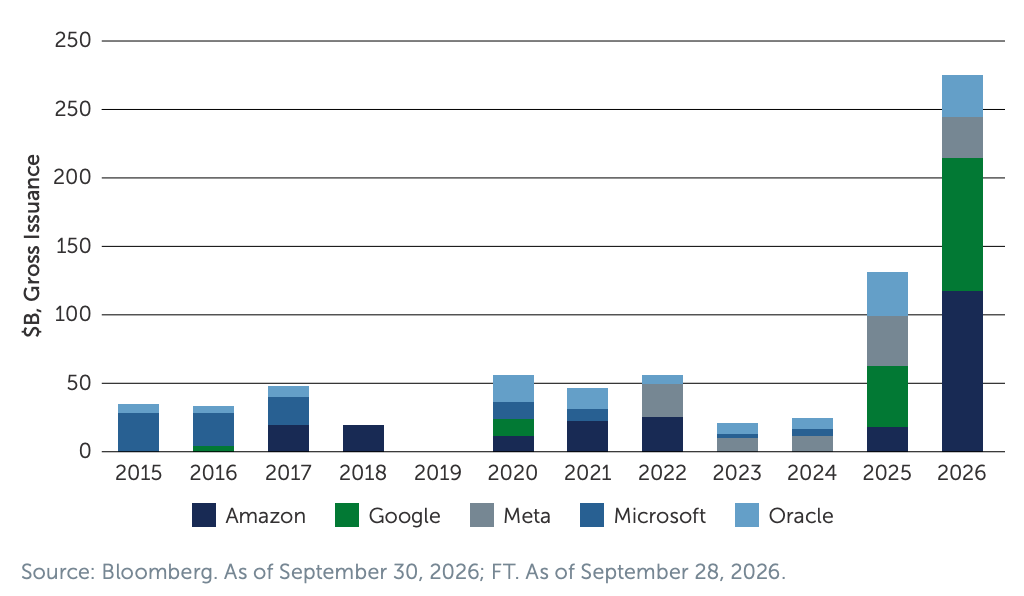
Hyperscalers’ AI-related issuance in 2026 could be three to four times the average of the previous five years.
👉 Barings
Also worth reading:
Carlyle | Sharpening the edge in credit secondaries
Investors can get so focused on the discount that they overlook the underlying yield of the assets. A portfolio of loans paying SOFR + 6.00% is worth considerably more than one paying SOFR + 4.75%, all else equal.
👉 Carlyle
Manager Updates
Goldman Sachs | The future of private credit
James Reynolds, Global Co-Head of Private Credit at Goldman Sachs Alternatives, explores the key trends shaping today’s senior direct lending market.
Our recent analysis of more than 150 European companies that experienced direct lending debt-to-equity swaps since 2017 found that 90 percent had EBITDA of less than €75 million, while half had EBITDA of less than €20 million.
Apollo & Goldman Sachs | $44bn SpaceX GPU financing
Apollo and Goldman Sachs provided SpaceX with $44 billion of senior and subordinated loans to fund GPUs. The transaction was oversubscribed and upsized.
👉 Apollo
📈 Bain Capital: Private Equity’s Problems Are Creating Opportunities for Private Credit
Bain published a white paper on ‘Flexible Capital’. Below are my highlights:
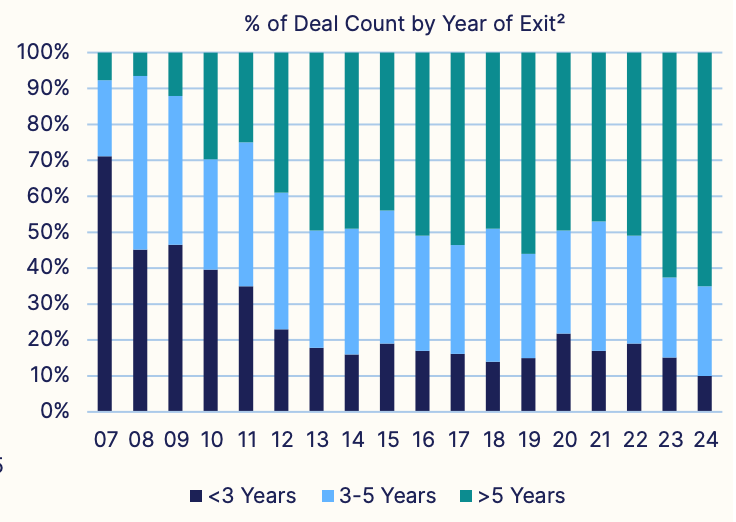
1. Private equity’s exit backlog keeps growing
Sponsors are sitting on an increasingly large pool of unrealised investments, and the share of deals held for more than five years is at an all-time high.
Bain Capital expects the growing pressure to return capital to investors will drive more demand for flexible financing, whether to generate liquidity or support further growth.
2. Higher rates are creating a financing gap
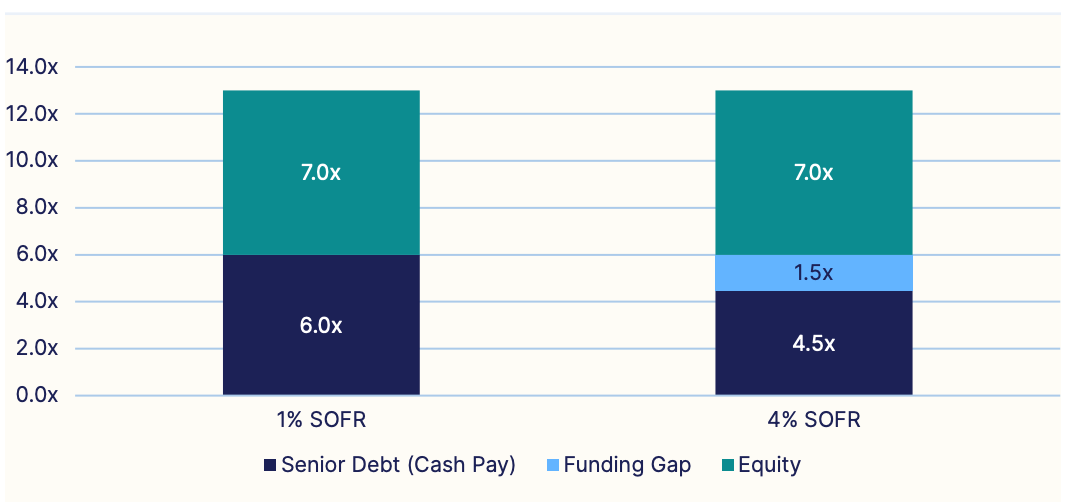
Bain Capital’s analysis shows that a rise in SOFR from 1% to 4% reduces senior borrowing capacity from 6.0x to 4.5x EBITDA.
This creates an opportunity for flexible capital providers to bridge the funding gap, helping companies finance acquisitions and growth without adding to their cash interest burden.
3. But flexible capital is a much less crowded market
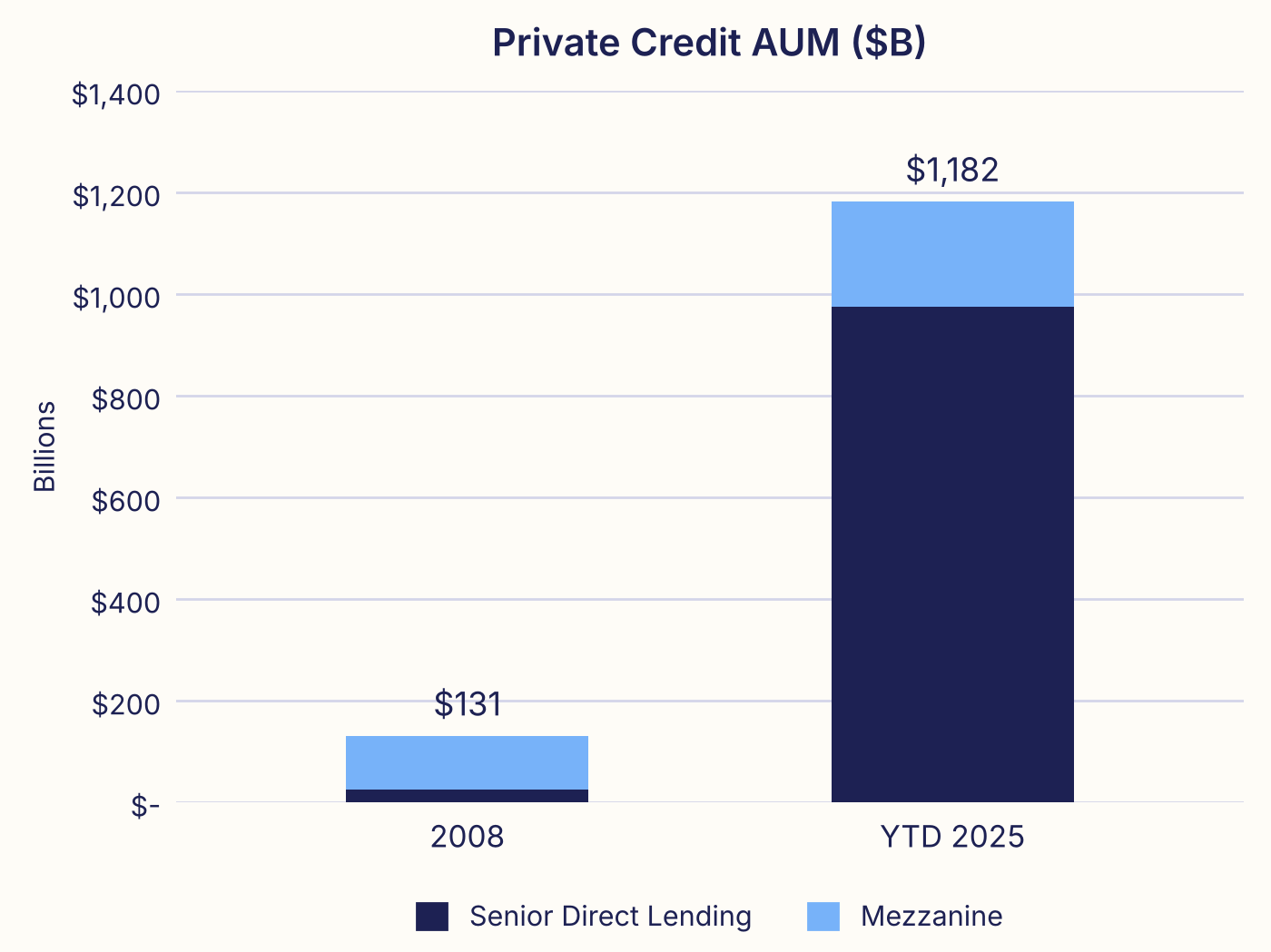
While most private credit fundraising has focused on senior direct lending, significantly less capital has been raised for mezzanine strategies.
With fewer lenders competing for deals, Bain Capital believes flexible capital providers are better positioned to negotiate attractive terms.
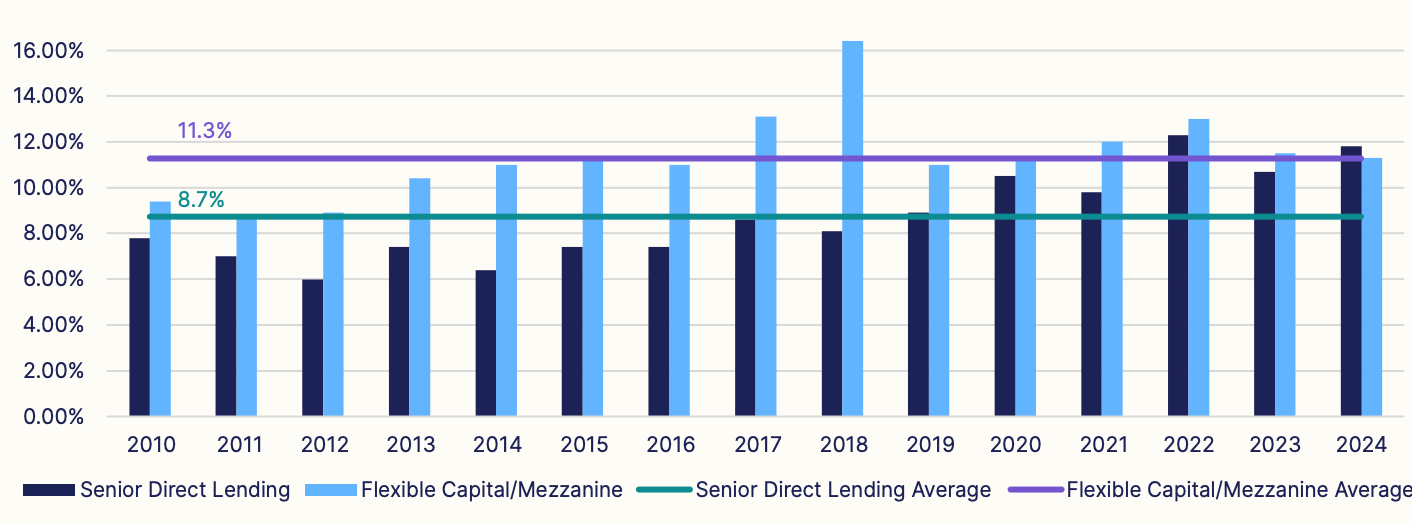
4. And the historical returns are compelling
Between 2010 and 2024, flexible capital/mezzanine returned an average of 11.3% a year, compared with 8.7% for senior direct lending.
Though the premium has narrowed sharply since rates rose, Bain Capital expects this to widen.
👉 Learn more about flexible capital
Also worth reading:
Hamilton Lane | Structured equity: separating fact from fiction
💰Fundraising News
Direct lending
Ares | $3.6bn European direct lending continuation fund
Ares raised a $3.6 billion direct lending continuation fund. The fund holds a portfolio of 24 assets from its 2018 vintage. Coller led the investment. Investors in the older vehicle, Ares Capital Europe Fund IV, received about 150% of their initial investment back, according to Bloomberg.
Harwood Private Capital | $160m Private Capital UK Fund II
Harwood Private Capital, a UK-based private credit manager, closed its $160 million Private Capital UK Fund II. The fund finances UK lower mid-market businesses across a range of sectors, including digital technology, clean energy supply chains, manufacturing and tourism.
Opportunistic credit
Carlyle | $2.2bn Credit Opportunities Fund IV (first close)
Carlyle announced a first close of $2.2 billion for its fourth credit opportunities fund. The team invests across the capital structure in family-, founder-, and management-owned companies, sponsor-backed companies, and special situations. It invests in America, Europe, and Asia Pacific. The previous fund raised $7.1 billion.
👉 Carlyle
Infrastructure credit
Infranity | $1.6bn Senior Infrastructure Debt IV
Infranity, a French investment manager, closed its $1.6 billion Senior Infrastructure Debt IV strategy. The fund lends to European infrastructure projects in sectors including energy transition, digital transformation, decarbonised mobility, environmental infrastructure, and the waste and water sectors.
F2i | $650m ICF 2 (third close)
F2i, an Italian infrastructure manager, announced a third close of $650 million for its second credit fund. ICF 2 pursues a pan-European infrastructure credit strategy through two compartments, one of which is PIR-compliant, focused on senior and senior holdco debt instruments in the energy transition, digital infrastructure, social infrastructure, environment and sustainable mobility sectors.
👉 F2i
Real estate debt
MetLife Investment Management | $370m Opportunistic Real Estate Debt Fund
MetLife Investment Management closed its $370 million Opportunistic Real Estate Debt Fund. The fund finances transitional commercial real estate opportunities across the United States. It targets senior and subordinate secured loans, with a focus on sectors such as multifamily, industrial, and select property types. The strategy focuses on borrowers that require capital to execute business plans, reposition assets, refinance existing debt, or navigate periods of market dislocation.
Deutsche Asset Management | $130m European Property Debt Fund II
Deutsche Asset Management, a German manager, closed its $130 million European Property Debt Fund II. The fund invests in a pan-European portfolio of secured real estate debt, primarily focusing on senior loans, targeting the mid-market segment with loan volumes between €25 million and €75 million. The fund aims for annual cash distributions of 5 to 7 percent and a net total return (IRR) of 6 to 7 percent. It focuses on high-quality real estate in Western European markets, particularly in Germany, France, the UK, Spain, the Nordic countries, and the Benelux region. The investment strategy concentrates on key sectors with strong fundamentals, including logistics, residential properties, student housing, and prime office properties.
This newsletter is for educational and entertainment purposes only. It should not be taken as investment advice.